
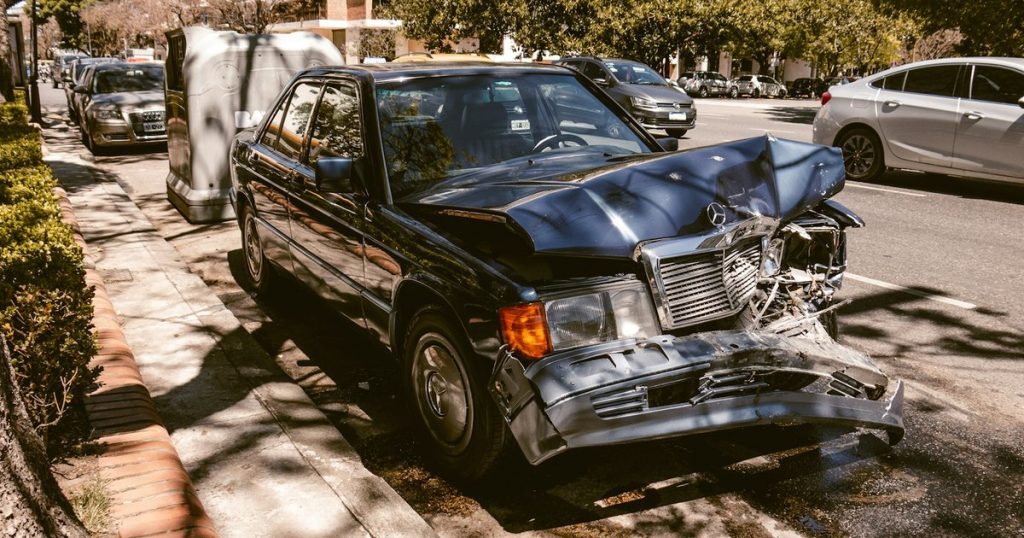
On 18 November 2026 the Federal Tax Authority issued Directive on Tax Transactions No. 6 of 2026 (FTA Directive No. 6 of 2026), which sets the VAT treatment of total-loss insured assets. It settles a point that VAT-registered policyholders and insurers have argued about since 2018. When a truck, a machine or a vessel is written off and the insurer takes title to the wreck, the insured is not making a supply of goods to the insurer for VAT purposes. The only condition is that the insurer pays nothing for the wreck over and above the insurance compensation.
This means the insured has no output tax to account for on the wreck and does not need to issue a tax invoice for it. The insurer has no input tax to claim when it takes the wreck over. VAT applies later, when the insurer sells the salvage to a buyer, and the insurer accounts for that VAT under the normal rules.
Key takeaways
- When an insured asset is written off and ownership passes to the insurer as part of the claim settlement, the handover is not a supply of goods for VAT.
- The insurance compensation and the insurer’s valuation of the wreck are not consideration for the transfer, so the insured issues no tax invoice and the insurer claims no input tax.
- The insurer’s later sale of the salvage is a taxable supply, normally at 5% VAT on the full sale price.
- Any payment outside the policy computation, such as an amount for uninsured accessories, is a separate supply and must be invoiced with VAT.
- Both parties must keep the total-loss and settlement records. Third-party claims, theft recoveries and past settlements are not clearly covered.
Note: This Directive has not yet been published in the Official Gazette. Clause 7 provides for its publication, and its formal entry into effect follows that publication. Insurers, takaful operators and VAT-registered policyholders should align their total-loss settlement procedures with the Directive now, while monitoring the Gazette for the publication date and for any indication of how the FTA will treat settlements concluded before it.
The statutory context: why total-loss settlements raised a VAT question
VAT under Federal Decree-Law No. 8 of 2017 (the VAT Law) is charged on a taxable supply. Article 1 defines a taxable supply as a supply of goods or services for a consideration by a person conducting business in the State. Article 5 treats a transfer of ownership of goods as a supply of goods. Article 1 also defines consideration widely, as everything received or expected to be received for the supply, whether in money or in another acceptable form.
A total-loss settlement fits those words uncomfortably well. Title to goods passes to the insurer and money passes to the insured, so the question has always been whether the money is paid for the goods.
Two views developed in the market. Under the first view, the settlement is an indemnity for a loss and the wreck goes to the insurer as a consequence of that indemnity, so there is no consideration and no supply. Under the second view, the settlement computation shows a salvage value for the wreck, that value is what the insurer gives for it, and a registered insured should invoice the wreck with 5% VAT. The FTA’s Insurance VAT Guide (VATGIN1) covers claims settlements and input tax on repair costs, but it did not resolve this point, and practice differed from one insurer to another.
The Directive is issued under Article 54(bis) of Federal Decree-Law No. 28 of 2022 on Tax Procedures. That article was inserted by Federal Decree-Law No. 17 of 2025 and has applied since 1 January 2026. It allows the FTA to issue directives on how tax legislation applies to tax transactions, and those directives bind both the FTA and taxpayers. FTA Decision No. 5 of 2021, as amended, sets the policy for issuing them. Directive No. 6 follows the five VAT Directives issued in July 2026, which dealt with court-appointed experts, VAT group deregistration, digital currency conversion, life insurance fees and the valuation of deemed supplies of services. It is the second Directive to deal with the insurance sector.
| Provision | What it says | Why it matters here |
|---|---|---|
| VAT Law, Article 1 | A taxable supply requires a supply for a consideration | Without consideration there is no taxable supply |
| VAT Law, Article 5 | A transfer of ownership of goods is a supply of goods | This is why the wreck transfer looked taxable |
| VAT Law, Articles 11 and 12 | Deemed supply of business assets without consideration, and the exceptions | The fallback risk if the transfer were a supply for no consideration |
| VAT Law, Article 43; Executive Regulation, Article 29 | Profit margin scheme for second-hand goods | Relevant to the insurer's onward sale of salvage |
| VAT Law, Article 78 | Record-keeping obligations | Clause 6 of the Directive adds a specific duty |
| Tax Procedures Law, Article 54(bis) | FTA power to issue binding directives | The source of the Directive's binding force |
Clause-by-clause analysis of the Directive
Clause 1: the core rule
The clause sets conditions that must all be met. The insured asset must be deemed a total loss because it cannot be economically or safely repaired. Ownership must pass from the insured to the insurer as part of the settlement of the insurance claim. The transfer must not be made in return for a separate consideration that is independent of the insurance compensation. When these conditions are met, the transfer is not regarded as a supply of goods. The Directive does not describe the transfer as exempt, zero-rated or valued at nil. It says there is no supply, and that wording matters for the points raised later in this article.
Clause 2: the compensation is not consideration
The amount the insurer pays for the insured loss under the insurance contract is not consideration for the transfer of ownership. The insurer pays because an insured event has occurred, and the Directive accepts that this payment is not a price for the wreck.
Clause 3: the valuation is not consideration
The value the insurer places on the asset when it assesses the loss or calculates the compensation is also not consideration for the transfer. This answers the second market view directly, because a salvage figure in a loss adjuster’s report is part of a calculation and does not represent a price agreed for the wreck.
Clause 4: formalities do not change the treatment
Administrative, regulatory and legal steps taken to settle the claim or to move title do not affect the VAT treatment. The Directive specifically mentions deregistration of the asset with the competent authority. A vehicle transfer form or a vessel deletion certificate therefore does not turn the handover into a sale.
Clause 5: the insurer’s onward sale is a supply
Once the insurer owns the asset, any sale or transfer to another person is a supply of goods by the insurer, and the general rules of the VAT Law and the Executive Regulation apply. For a UAE insurer selling a wreck located in the State, this will normally mean 5% VAT on the sale price. Zero-rating is available only if the conditions for an export of goods are met.
Clause 6: records on both sides
The insured and the insurer must each keep the documents that evidence the total-loss determination and the settlement of the claim. This sits on top of the general record-keeping duty in Article 78 of the VAT Law. In practice, whichever party relies on the non-supply treatment will need to show that the conditions in Clause 1 were met.
Worked example: VAT on a written-off refrigerated truck
Danat Cold Chain LLC is a VAT-registered distributor in Dubai. It bought a refrigerated truck for AED 400,000 plus AED 20,000 VAT and recovered the input tax in full. Two years later the truck is badly damaged in a collision.
Danat’s insurer, Bahr Insurance PJSC, assesses the pre-accident market value at AED 300,000 and the repair cost at AED 240,000. Bahr concludes that repair is uneconomic and declares a total loss. The adjuster’s report values the wreck at AED 45,000. After deducting a policy excess of AED 5,000, Bahr pays Danat AED 295,000 and takes title to the wreck. Four weeks later Bahr sells the wreck at auction for AED 52,000 plus VAT.
| Step | If the wreck transfer were a supply (the risk before the Directive) | Under Directive No. 6 of 2026 |
|---|---|---|
| Danat transfers the wreck to Bahr | Supply of goods valued at AED 45,000; output tax AED 2,250; tax invoice required | Not a supply; no output tax; no tax invoice |
| Danat's input tax of AED 20,000 on the original purchase | Unaffected | Unaffected |
| Bahr acquires the wreck | Input tax of AED 2,250 claimed on Danat's invoice | No input tax to claim |
| Bahr sells the wreck at auction for AED 52,000 | Output tax AED 2,600 | Output tax AED 2,600 |
| Net VAT paid to the FTA across the chain | AED 2,600 | AED 2,600 |
The FTA collects AED 2,600 in both cases. The difference is that Danat no longer has anything to report on the wreck. Its AED 2,250 output tax exposure goes away, and so does the penalty risk for failing to issue a tax invoice.
One change to the facts gives a different result. Suppose the truck carried a telematics and racking installation that the policy did not cover, and Bahr agrees to pay Danat a further AED 10,000 for it so that the wreck can be sold complete. That AED 10,000 is a separate consideration that is independent of the insurance compensation, so Danat is making a supply of goods for it. If the agreement says nothing about VAT, the amount is treated as inclusive of tax. Danat must account for AED 476.19 of output tax (AED 10,000 × 5/105) and issue a tax invoice. The Directive only covers the insurance compensation, so any amount paid outside the policy computation has to be looked at separately for VAT.
Gray areas: third-party claims, theft recoveries and salvage sales
Third-party claims are outside the literal wording
Clause 1 refers to ownership passing “from the Insured to the Insurer”. Many UAE motor total losses are settled under third-party liability cover. In those cases the insurer of the driver at fault pays the other party and takes that party’s wreck, so the person handing over the wreck is a claimant and is not the insured under that policy. The reasoning in Clauses 2 and 3 applies equally well to this situation. Even so, a Directive binds only within its scope, and a registered fleet owner that hands its wreck to another party’s insurer has less certainty than the wording gives to an insured. We expect this to be one of the first questions raised with the FTA.
Theft recoveries do not fit the description of total loss
The Directive links total loss to an asset that cannot be economically or safely repaired. A stolen asset may be paid out as a total loss and recovered intact some months later. Title then belongs to the insurer, but repair cost had nothing to do with it. The same doubt applies to a constructive total loss of cargo or a vessel that is declared for reasons other than repair cost. These transfers may still be outside the scope of VAT on general principles. They do not have the binding protection of the Directive.
The deemed supply rule should not apply, although the Directive does not say so
Article 11 of the VAT Law deems a supply when a taxable person supplies business assets without consideration after recovering input tax on them. An insured that recovered input tax in full on the lost asset might worry that a transfer for no consideration moves from Article 5 into Article 11. In our view it does not, because Clause 1 says the transfer is not a supply of goods at all, which leaves nothing for Article 11 to deem. An express statement in the Directive would have removed the doubt.
The profit margin scheme is harder for insurers to apply to salvage
Article 29 of the Executive Regulation allows tax to be calculated on the margin for second-hand goods bought from a non-registrant, or from a taxable person who used the scheme. The FTA has also required that the goods were subject to VAT at an earlier point. An insurer that takes a wreck under a transfer that is not a supply has not purchased it in the ordinary sense, and it has no purchase price from which to work out a margin. Insurers that apply the scheme to salvage taken from private individuals should check whether they can continue to do so and what purchase price they would use. This matters most where salvage is sold at VAT-inclusive auction prices to unregistered buyers, because tax on the full price reduces the insurer’s recovery.
The Directive is silent on past settlements
It does not say how periods before its effective date will be treated. Some registered insureds charged VAT on wrecks, and their insurers recovered that VAT as input tax. Tax shown on a tax invoice remains payable to the FTA by the person who issued it. The insurer’s recovery of tax charged on a transfer that is not a supply could be challenged. The amounts cancel out across the chain, so a practical approach from the FTA is likely, but neither side should rely on that. Insurers should work out how much input tax they have claimed on salvage acquisitions in earlier periods.
Retained salvage and buy-backs are different transactions
If the insured keeps the wreck and the settlement is reduced by its value, there is no transfer and the Directive does not apply. If the insurer takes title and the insured later buys the wreck back, Clause 5 applies and the insurer makes a taxable supply to its own policyholder. Settlement forms should make clear which of these two routes has been followed, because the VAT result is different.
What insurers and policyholders should do now
- VAT-registered policyholders should stop issuing tax invoices for wrecks surrendered under total-loss settlements once the Directive takes effect, and should make sure the finance team is told when a total loss is declared so that the fixed asset register does not generate a disposal invoice automatically.
- Insurers and takaful operators should amend their claim settlement forms, discharge vouchers and salvage transfer letters so that they describe the transfer as part of the settlement and do not put a price on the wreck.
- Both sides should identify any payment made outside the policy computation, such as an amount for uninsured accessories, and treat it as a separate supply.
- Insurers should review how they dispose of salvage, confirm that output tax is charged on the full sale price unless a specific relief clearly applies, and reconsider any use of the profit margin scheme.
- Both sides should keep a file for each total-loss claim that holds the adjuster’s or surveyor’s report, the repair estimate, the total-loss determination, the settlement computation, the discharge and the title transfer or deregistration papers, and should retain it for the statutory period.
- Third-party claims, theft recoveries and total losses declared for reasons other than repair cost should be reviewed case by case because the wording does not clearly cover them.
- Businesses that charged or recovered VAT on wreck transfers in earlier periods should quantify those amounts now.
How TSAC can help
TSAC advises insurers, takaful operators, brokers, fleet owners and asset-heavy businesses on UAE VAT. We can review your claim settlement and salvage documents against the Directive and test earlier wreck transactions for output tax and input tax exposure. We also advise insurers on the VAT treatment of salvage sales, including the profit margin scheme, and we prepare clarification requests for transactions that fall into the gaps described above. The Directive takes VAT off the handover of the wreck, but the FTA will still expect a complete claim file from both parties, so it is worth putting that file in order before the first audit query arrives.
Need a review of your total-loss settlements or salvage sales? Book a free consultation with our VAT team.
Frequently asked questions about FTA Directive No. 6 of 2026
What does FTA Directive No. 6 of 2026 cover?
It covers the VAT treatment of an insured asset that is deemed a total loss because it cannot be economically or safely repaired, where ownership of the asset passes from the insured to the insurer as part of the settlement of the insurance claim.
Is VAT due when a written-off vehicle is handed to the insurer?
No. Provided the insurer pays nothing for the wreck over and above the insurance compensation, the transfer is not a supply of goods. The insured has no output tax to account for and does not issue a tax invoice for the wreck.
Can the insurer recover input tax when it takes over the wreck?
No. Because the transfer is not a supply, there is no VAT charged on it and therefore no input tax for the insurer to claim.
Is VAT charged when the insurer sells the salvage?
Yes. Once the insurer owns the asset, any sale or transfer of it is a supply of goods by the insurer under the general VAT rules. For a wreck located in the UAE this normally means 5% VAT on the sale price, unless the export conditions for zero-rating are met.
What records do the insured and the insurer need to keep?
Both sides must keep the documents that evidence the total-loss determination and the settlement of the claim, such as the adjuster’s or surveyor’s report, the repair estimate, the settlement computation, the discharge and the title transfer or deregistration papers.
Does the Directive apply to third-party claims and theft recoveries?
Not clearly. The wording refers to ownership passing from the insured to the insurer and links total loss to repair cost, so third-party claims, theft recoveries and constructive total losses declared for other reasons should be reviewed case by case.
This publication is for general information only and does not constitute tax advice. Based on the unofficial English translation of FTA Directive on Tax Transactions No. 6 of 2026; the Arabic text prevails. Please contact TSAC for advice specific to your circumstances.