
Tax audit UAE rules apply to every sector, yet a healthcare review looks very different from one at a trading company. In a tax audit, UAE inspectors examine how a clinic, pharmacy or medical centre splits zero rated care from standard rated services, how it treats medicines and equipment, and whether its licensing records support every claim. Healthcare margins are thin, so a wrong rate on cosmetic work or a missing practitioner licence can turn into a costly assessment. This guide explains what the Federal Tax Authority checks in this sector and how our audit team helps practices prepare.
Key Takeaways
- Preventive and basic healthcare from licensed providers is zero rated, but elective cosmetic work is generally taxed at 5%.
- Medicines and equipment are zero rated only when they appear on the Cabinet list of medical products, now a single category since October 2026.
- Clinics also face corporate tax at 9% above AED 375,000, and auditors check DHA or DOH licences against what was billed.
Tax Audit UAE: Why Clinics Face a Sector Specific Review
Healthcare businesses mix zero rated, standard rated and sometimes exempt supplies in one patient visit. The FTA therefore tests rate decisions line by line, not just totals. A general audit checklist misses these risks, so clinics need a review built around treatment codes, product lists and the licences behind each service.
Most VAT audits start with a reconciliation between returns, the ledger and bank receipts. In healthcare, the auditor then goes further. They sample patient invoices and ask why each line carried 0% or 5%. They also compare the rate on the invoice with the treatment notes and the practitioner who delivered it.
A dental clinic may offer fillings, whitening and branded toothpaste in the same visit. Each item can sit under a different rule. A dermatology centre faces the same split between medical treatment and aesthetic work. A pharmacy inside a hospital adds retail goods to the mix. In a tax audit, UAE officers expect the system to apply these rules consistently.
The FTA can now reach further back too. Changes to the Tax Procedures Law in force from January 2026 keep the general five year audit window but allow up to fifteen years in cases such as evasion or failure to register. Old billing habits therefore matter, even where the clinic has since changed its software or its finance team.
Zero Rated and Standard Rated Healthcare Under VAT
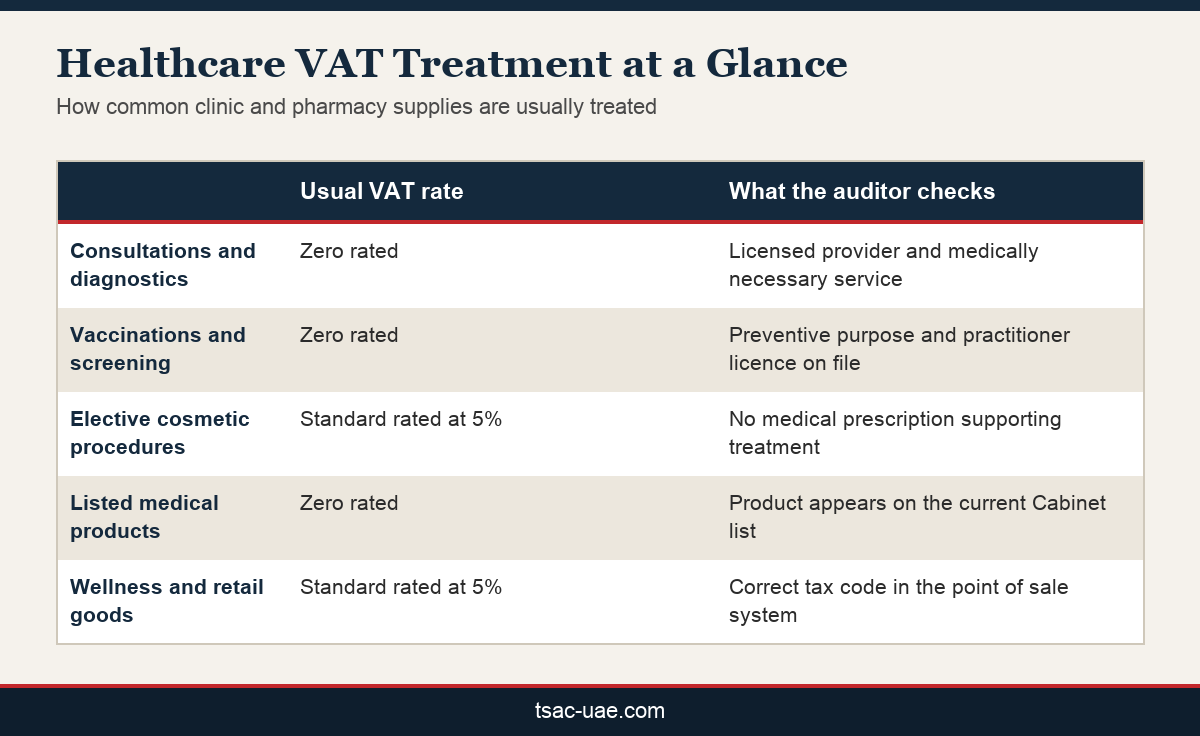
UAE VAT law zero rates preventive and basic healthcare services that the medical profession generally accepts as necessary for treatment. The provider must be licensed. Elective cosmetic procedures fall outside the relief unless a medical professional prescribes them to treat or prevent a condition. Getting this split right drives most healthcare audit outcomes.
The test sits in Article 41 of the VAT Executive Regulation. A consultation, diagnostic test or vaccination usually qualifies. Botox for wrinkles, elective hair transplants and spa style treatments usually do not, and carry 5% VAT. Where a doctor prescribes a procedure to treat a real condition, keep the clinical note that shows it.
Goods supplied as a necessary part of a zero rated service can share the zero rate. A dressing used during treatment is one example. Retail sales of cosmetics or supplements at the front desk are separate supplies at the standard rate. Packages that bundle a medical check with a spa session need careful splitting, because the FTA looks at what the patient actually receives.
Auditors also look at input tax. Zero rated supplies keep full recovery, so clinics with mixed services must show clean records for each purchase. Our quarterly return support builds that split into the return itself. The FTA legislation library holds the current law and decisions.
Medicines, Medical Products and Pharmacy Sales
Pharmacies and clinics that dispense drugs face a separate test. Medicines and equipment are zero rated only if they appear on the list the Cabinet issues. Cabinet Decision 149 of 2026, effective 1 October 2026, merged pharmaceutical products and medical equipment into one category called medical products, so product master files need review.
In practice, an auditor pulls the point of sale item list and matches each zero rated line against the Cabinet list. Products that are not registered or approved, along with general wellness goods, should carry 5%. Clinics that dispense from an in clinic store face the same check as a standalone pharmacy.
The October 2026 amendment is mainly a change of wording, but it is a good moment to remap your product codes. Many pharmacies still run tax codes set up years ago, and new products are often added without a rate check. During a tax audit, UAE inspectors often find these errors in fast moving lines such as supplements and skincare.
Keep supplier certificates, registration references and purchase invoices together for each zero rated product. When an auditor questions a rate, that file is your evidence. Without it, the FTA may treat the sale as standard rated and assess the difference with penalties. Review the file whenever a supplier changes.
Corporate Tax for Clinics and Professional Partnerships
Corporate tax applies to clinics at 9% on taxable income above AED 375,000. Structure matters. Companies are taxed directly, doctors trading as individuals are in scope once business turnover passes AED 1 million a year, and unincorporated partnerships are generally transparent, so each partner reports a share of the results.
Small Business Relief, extended by Ministerial Decision No. 131 of 2026, now covers tax periods ending on or before 31 December 2029 where revenue stays at or below AED 3 million. Clinics using it must still register and file, and they cannot claim it alongside certain other reliefs. Once revenue passes AED 3 million in a tax period, the relief stops applying, so growing clinics should track turnover every quarter.
A clinic whose revenue exceeds AED 50 million, or one claiming free zone benefits, must prepare audited financial statements. Records supporting the return must be kept for at least seven years. Our corporate tax return support covers both companies and partnerships.
Watch related party arrangements. Doctors who own the clinic and also draw fees, or a group that rents premises from a partner, must price those transactions at arm’s length and document them. A VAT review can widen into corporate tax questions once these payments appear in the ledger.
How to Prepare Your Practice for an FTA Visit
Preparation is cheaper than defending an assessment. Start with a rate review of services and products, then reconcile returns to the ledger and bank. Line up licences, contracts and insurer statements so every zero rated claim has evidence. Finally, decide who will speak to the FTA on your behalf during the audit.
Licensing records are central. Keep current DHA or DOH facility licences, practitioner licences and the scope of services each doctor may provide. The FTA can compare billed treatments against what the licence allows. Expired or missing practitioner licences weaken the zero rate claim for every service that doctor delivered.
Insurance billing is another trap. Reconcile claims paid by insurers, patient copayments and rejected claims to revenue. Gaps between insurer statements and the ledger often trigger extra questions. Review the FTA’s 2026 record keeping decision for format requirements, and keep electronic records easy to export when the FTA asks.
Finally, consider appointing a tax agent to represent you. A professional representative manages document requests, answers technical questions and keeps clinical staff focused on patients. Agree internally who collects records, who signs off responses and how quickly each request will be answered, so nothing slips while the audit runs.
Conclusion
When preparing for a tax audit, UAE healthcare providers benefit from clear rate decisions and complete records. Map every service and product to the right VAT treatment, confirm your corporate tax structure, and keep licences and insurer data reconciled. TSAC, founded in 2020 with offices in Dubai and Sharjah, supports clinics, pharmacies and medical centres through audit preparation and FTA correspondence. If an audit notice has arrived, or you want a health check before one does, book a free consultation with our team and get a clear plan for your practice.
Frequently Asked Questions
Tax audit UAE: what does a clinic review usually cover?
It usually covers VAT rate decisions on services and products, input tax recovery, and reconciliation of returns to the ledger. The FTA may also review corporate tax filings, licences and insurer receipts. Expect requests for invoices, contracts and supporting records.
Is all healthcare zero rated for VAT in the UAE?
No. Preventive and basic healthcare that the medical profession accepts as necessary for treatment is zero rated when a licensed provider supplies it. Elective cosmetic procedures are generally standard rated at 5%, unless prescribed to treat or prevent a medical condition.
Are all medicines sold in a pharmacy zero rated?
Only medical products named on the Cabinet list qualify for the zero rate. Other items, such as general wellness goods and cosmetics, are normally standard rated. Pharmacies should match each product code against the current list and keep supporting evidence.
What changed for medical products in October 2026?
Cabinet Decision 149 of 2026 took effect on 1 October 2026. It merged pharmaceutical products and medical equipment into one category called medical products. The zero rate still depends on the list the Cabinet issues, so product mapping should be reviewed.
Do doctors working as individuals pay corporate tax?
A natural person conducting business is in scope once total business turnover exceeds AED 1 million in a calendar year. Doctors employed on a salary are not taxed on that salary. Self employed practitioners should check their turnover each year.
Does a medical clinic need audited financial statements?
For corporate tax, audited statements are required where revenue exceeds AED 50 million or the clinic is a qualifying free zone person. Free zone or licensing authorities may set their own audit rules. Confirm both requirements every year.
How far back can the FTA audit a healthcare business?
The general limit is five years from the end of the tax period. From January 2026 it can extend up to fifteen years in specific cases, such as evasion or failure to register. Keep records accessible for the full retention period.
How can a clinic check its readiness before an FTA audit?
Run an internal rate review, reconcile returns to the ledger and bank, and file licences with insurer statements. Compare your process with our general FTA audit checklist and use bookkeeping support to close gaps.